Archives for October 2019
Great Ways to Celebrate the Holiday without Sweets by Joe Szabo, Scottsdale Real Estate Team
Plant Spring Bulbs
When the leaves begin to change, planting spring flowers is probably the last thing you’re thinking about—but you should be! For spring flowers like tulips, daffodils, and hyacinth, fall is the best time to get the bulbs in the ground. If you’re not sure how to plant spring bulbs, we can walk you through the entire process (it’s easy!).
Go on a Nature Walk
Taking a stroll around the neighborhood has health benefits any time of year, but it’s extra enjoyable when you can admire colorful fall foliage as you walk. Take the dog around the block or plan a time to grab to-go coffee with your girlfriends and take a long stroll through the park.Volunteer at a Food Bank
Many families volunteer with local shelters or food banks around the holidays, but they need support year-round. As the weather begins to cool down, head to your local food bank to drop off extra canned goods or offer to help prepare a meal. Call to check in with them to see what their needs are before you go.Decorate a Pumpkin
If it feels too early to carve a jack-o’-lantern, paint your pumpkins for fall instead. Stock up on white pumpkins and unusual gourds to decorate your mantel or front porch, and add a few coats of paint. We love the farmhouse look of a gingham pumpkin—and it’s actually easier than it looks!Decorate with Fall Colors
Take inspiration from the trees outside and bring the bright colors of fall indoors. Look through our favorite fall decorating ideas to get inspiration for your own space.Burn Your Favorite Fall Candle
There are so many ways to make your home smell like fall, but burning seasonal candles is one of our favorites. Bath & Body Works’ fall candle line is full of seriously swoon-worthy scents (hello, Pumpkin Pecan Waffles) and they even have a selection of spooky Halloween candles too. Please note that this Scottsdale Real Estate Blog is for informational purposes and not intended to take the place of a licensed Scottsdale Real Estate Agent. The Szabo Group offers first-class real estate services to clients in the Scottsdale Greater Phoenix Metropolitan Area in the buying and selling of Luxury homes in Arizona. Award winning Realtors and Re/MAX top producers and best real estate agent for Luxury Homes in Scottsdale, The Szabo group delivers experience, knowledge, dedication and proven results. Contact Joe Szabo at 480.688.2020, info@ScottsdaleRealEstateTeam.com or visit www.scottsdalerealestateteam.com to find out more about Scottsdale Homes for Sale and Estates for Sale in Scottsdale and to search the Scottsdale MLS for Scottsdale Home Listings.Your Home’s Fall Checklist by Joe Szabo, Scottsdale Real Estate Team
Get Your Mind in the Gutters
Your roof’s drainage system annually diverts thousands of gallons of water from your house’s exterior and foundation walls. That’s why it is so important to keep this system flowing smoothly. Clogged gutters can lead to damaged exterior surfaces and to water in your basement. They are also more prone to rust and corrosion. Before the leaves fly this fall, have your gutters cleaned, then covered with mesh guards to keep debris from returning.
Related: How to Care for Gutters
Button Up Your Overcoat
A home with air leaks around windows and doors is like a coat left unbuttoned. Gaps in caulk and weather-stripping can account for 10 percent of your heating bills, according to the U.S. Department of Energy. Weather-stripping is easily the most cost-effective way to rein in heating and cooling costs. This humble material also reduces drafts and keeps your home more comfortable year-round. Because weather stripping can deteriorate over time, it is important to inspect it periodically. If you suspect a problem with weather stripping, you have several options for checking. Close a door or window on a strip of paper; if the paper slides easily, your weatherstripping isn’t doing its job. Or, close the door or window and hold a lighted candle near the frame. (Don’t let the flame get near anything flammable!) If the flame flickers at any spot along the frame, you have an air leak. While you’re at it, also check for missing or damaged caulk around windows, doors, and entry points for electrical, cable, phone, gas, and so. Seal any gaps with a suitable caulk. Related: More Fall Fix-Ups for Your HomeGet on Top of Roof Problems
Few homeowner problems are more vexing than a leaky roof. Once the dripping starts, finding the source of the problem can be time-consuming. Stop problems this fall before ice and winter winds turn them from annoyances into disasters. Start by inspecting your roof from top to bottom, using binoculars if necessary. Check ridge shingles for cracks and wind damage. Look for damage to metal flashing in valleys and around vents and chimneys. Scan the entire roof for missing, curled, or damaged shingles. Look in your gutters for large accumulations of granules, a sign that your roof is losing its coating; expect problems soon. Finally, make sure your gutters are flowing freely. Editor’s Tip: Roof-mounted television antennas, even if they aren’t in use, may have guy wires holding them in place. Look for loose or missing guy wires. If you see some, and your antenna is no longer being used, consider having it removed altogether.
Related: Roof Repair Tips Every Homeowner Should Know
Please note that this Scottsdale Real Estate Blog is for informational purposes and not intended to take the place of a licensed Scottsdale Real Estate Agent. The Szabo Group offers first-class real estate services to clients in the Scottsdale Greater Phoenix Metropolitan Area in the buying and selling of Luxury homes in Arizona. Award winning Realtors and Re/MAX top producers and best real estate agent for Luxury Homes in Scottsdale, The Szabo group delivers experience, knowledge, dedication and proven results. Contact Joe Szabo at 480.688.2020, info@ScottsdaleRealEstateTeam.com or visit www.scottsdalerealestateteam.com to find out more about Scottsdale Homes for Sale and Estates for Sale in Scottsdale and to search the Scottsdale MLS for Scottsdale Home Listings.How to Upcycle your Pumpkins after Halloween by Joe Szabo, Scottsdale Real Estate Team
So you bought your pumpkins! Fresh and pretty- the sign of the season, but before you think about dumping them in the trash after Halloween, think again!
Once all the trick-or-treating is over and it’s time to change your decor to the next holiday, you may be wondering what to do with all your Halloween pumpkins. Tons of them just get tossed in the trash—according to the U.S. Department of Energy, about 1.3 billion pounds of pumpkins in the U.S. end up in landfills, which is pretty scary! Instead, try our eco-friendly ideas for repurposing, reusing, or recycling your gourds post-October. Even those jack-o’-lanterns that may be looking a little shriveled and sunken still can be useful.
1. You Can Eat Most Pumpkins
Of course, you can always bring any clean, uncarved pumpkins to the kitchen to eat yourself! Toasted pumpkin seeds make a healthy snack, and you can use fresh pumpkin puree in any recipe that calls for the canned version. You’ll need to do a little conversion: Keep in mind that one 2-1/2 pound pumpkin is equivalent to about 15 ounces canned pumpkin—the standard grocery store size. Some varieties like Jarrahdale, Hubbard, and Pie pumpkins are grown specifically for eating, so they have naturally sweet, smooth flesh. But you can also doctor up other pumpkin varieties to use in sweet or savory pumpkin recipes (we’d recommend only eating pumpkins that you’ve kept inside your house though, where they’ve been safe from insects and other critters).2. Pass Along Your Pumpkins
Don’t want to deal with the pumpkins yourself? No worries! There are plenty of places that may take them off your hands. See if you can donate leftover pumpkins to zoos, animal shelters, farms, or community gardens. They’ll be grateful for the compost material or animal snacks. Look local; some towns do a pumpkin collection drive after Halloween, and some farms put out calls for local pumpkin donations. Organizations like Scarce and Pumpkins for the People also have drop-off sites where you can take your old pumpkins, and then they’ll compost them to keep them out of landfills.3. Feed the Birds
Attract feathered friends to your yard by turning your Halloween pumpkin into a bird feeder. Just cut a pumpkin in half horizontally, empty the cavity, and fill it with birdseed. Either leave it out as is or hang it from a tree with several lengths of thick twine or rope wrapped under the base. You can add the pumpkin’s seeds to your regular birdseed, too! Rinse and dry the seeds before mixing them in. Don’t flavor or salt the seeds; the birds will eat them as is.4. Create Compost
Pumpkins make a great addition to your compost pile! Because they’re mostly water, they decompose quickly, but it’ll go even faster if you break them apart first. Turn pumpkin smashing into a fun family activity—you probably won’t have to look far to find willing participants. Pumpkin composting is pretty simple. Just remember to remove the seeds first so your gourds don’t root in the pile. If you’d like, you can save them to try your hand at growing your own pumpkin crop. Just rinse the pulp away and allow the seeds to dry. Store them in an envelope in a cool, dry place until you’re ready to plant. Please note that this Scottsdale Real Estate Blog is for informational purposes and not intended to take the place of a licensed Scottsdale Real Estate Agent. The Szabo Group offers first-class real estate services to clients in the Scottsdale Greater Phoenix Metropolitan Area in the buying and selling of Luxury homes in Arizona. Award winning Realtors and Re/MAX top producers and best real estate agent for Luxury Homes in Scottsdale, The Szabo group delivers experience, knowledge, dedication and proven results. Contact Joe Szabo at 480.688.2020, info@ScottsdaleRealEstateTeam.com or visit www.scottsdalerealestateteam.com to find out more about Scottsdale Homes for Sale and Estates for Sale in Scottsdale and to search the Scottsdale MLS for Scottsdale Home Listings.Door Handle & Locks by Joe Szabo, Scottsdale Real Estate Team
How to Install a Door Handle and Lock
Supplies Needed
- Door knob/handle kit (we used the Addison handleset from Schlage)
- Deadbolt kit (if not included)
- Tape measure
- Pencil
- Utility knife, if needed
- 1-inch chisel, if needed
- Power drill (or Philips screwdriver with a long shaft)
- Countersink bit (if using a drill)
- Flathead screwdriver, optional
- Hammer
- Block of wood
Step-by-Step Directions
Follow our instructions for installing a front door handle and lockset to get a fresh look you love and enhance your home’s curb appeal.Step 1: Install the Latch
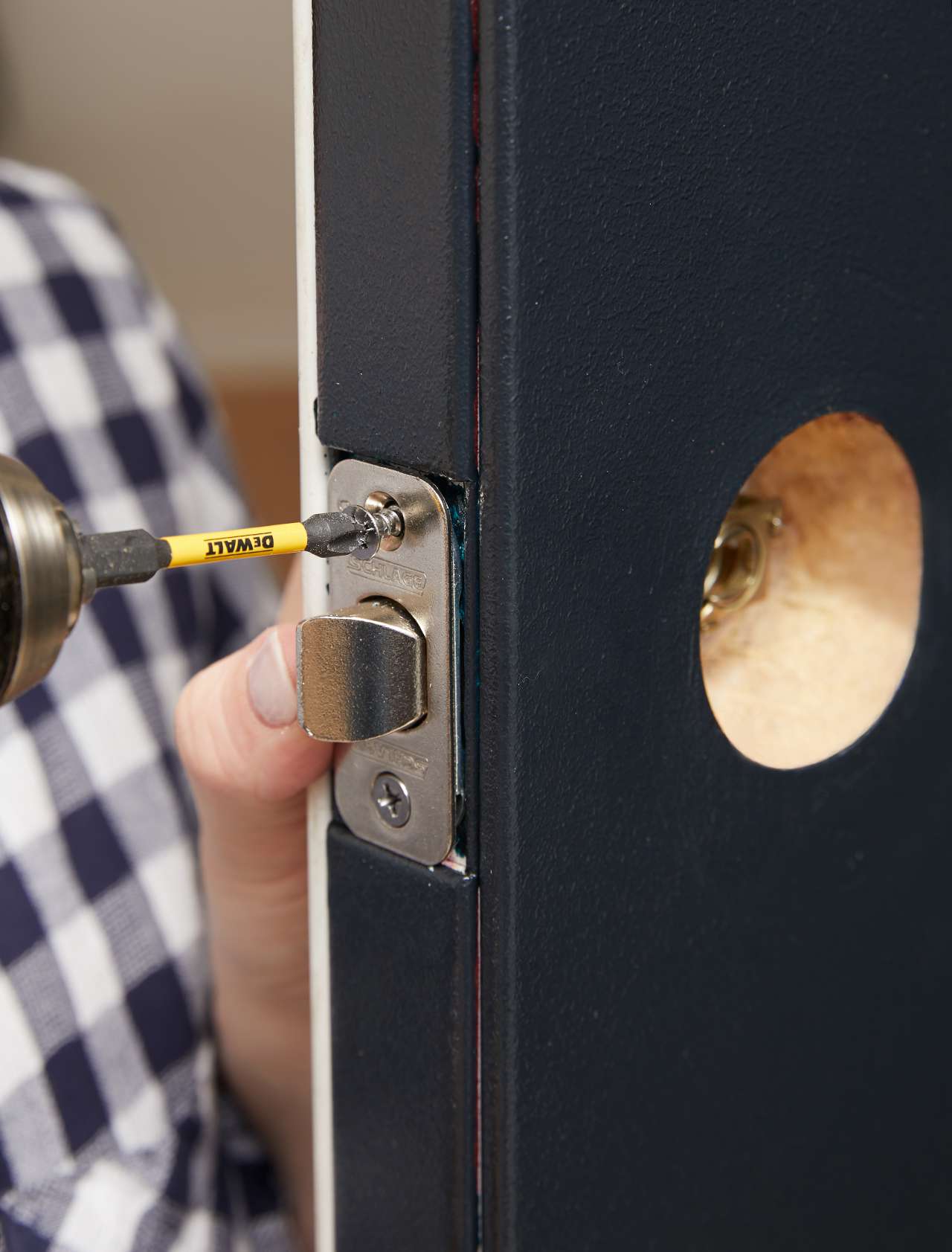
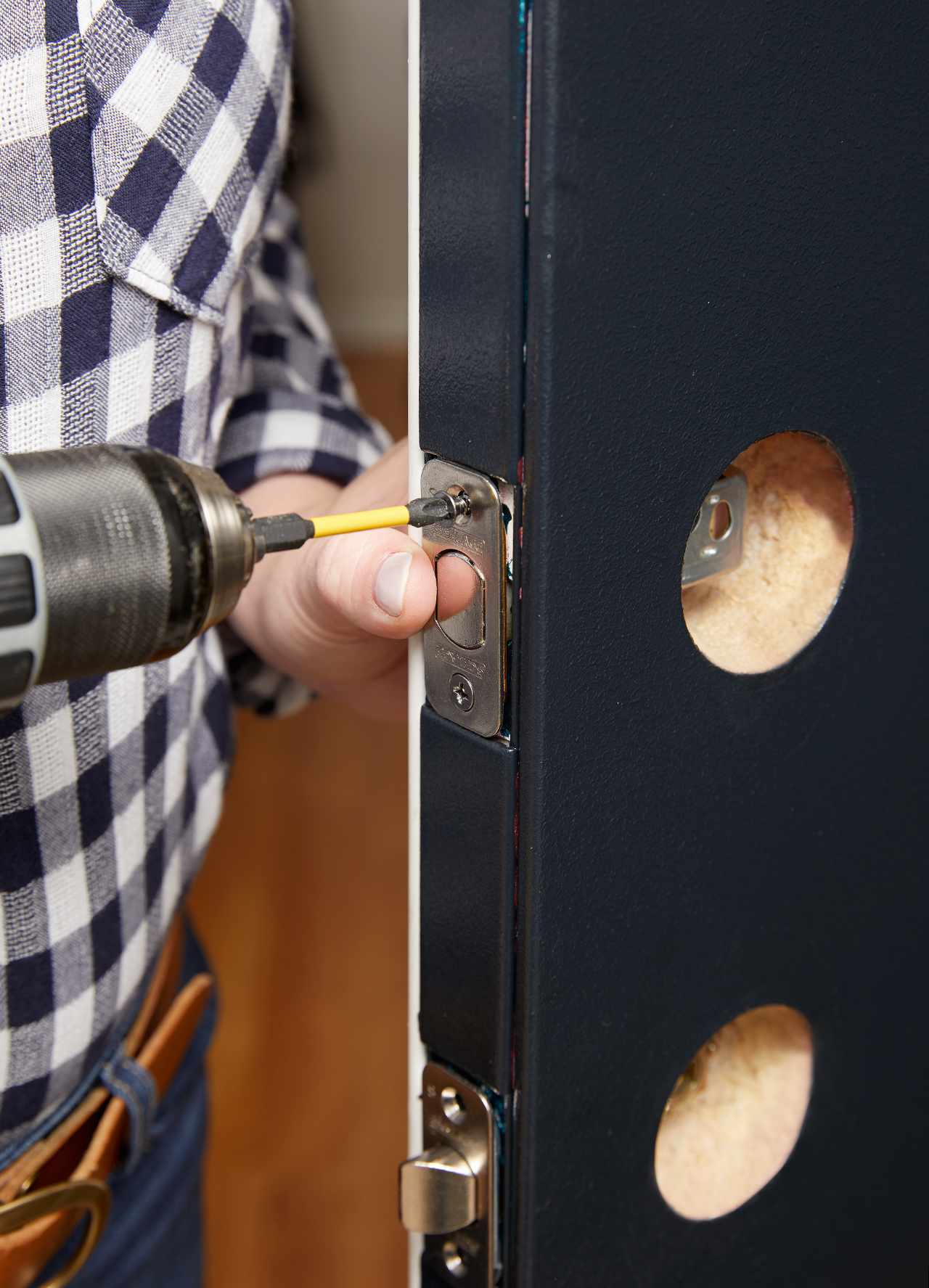
Determine whether you want to use a flat, rectangular faceplate or a round drive-in faceplate. (Many kits come with both options.) If you want to use a flat faceplate but do not have an indent on the edge of your door to fit it over the cross bore, trace the outline of the faceplate with a pencil and score the outline with a utility knife so the wood doesn’t splinter. Use a 1-inch chisel to chisel out a rectangle 1/8-inch deep (it must be flush with the door jamb), 1 inch wide, and 2-1/4 inches tall, centered around the cross bore. Once you have an indent on the edge of your door, slide the latch into the cross bore, with the bevel facing the door jamb, and secure it against the indent with two short screws. If you prefer the smaller round drive-in faceplate, use a flathead screwdriver to remove the screws on the flat faceplate and support plate. Install the round drive-in faceplate over the latch and push down to secure. Slide the latch and drive-in faceplate into the cross bore with the bevel facing the door jam, and push in until tight. Use a hammer with a block of wood between it and the latch to gently pound it into place (until flush with the edge of the door) without damaging the hardware.Step 2: Install the Outside Handle
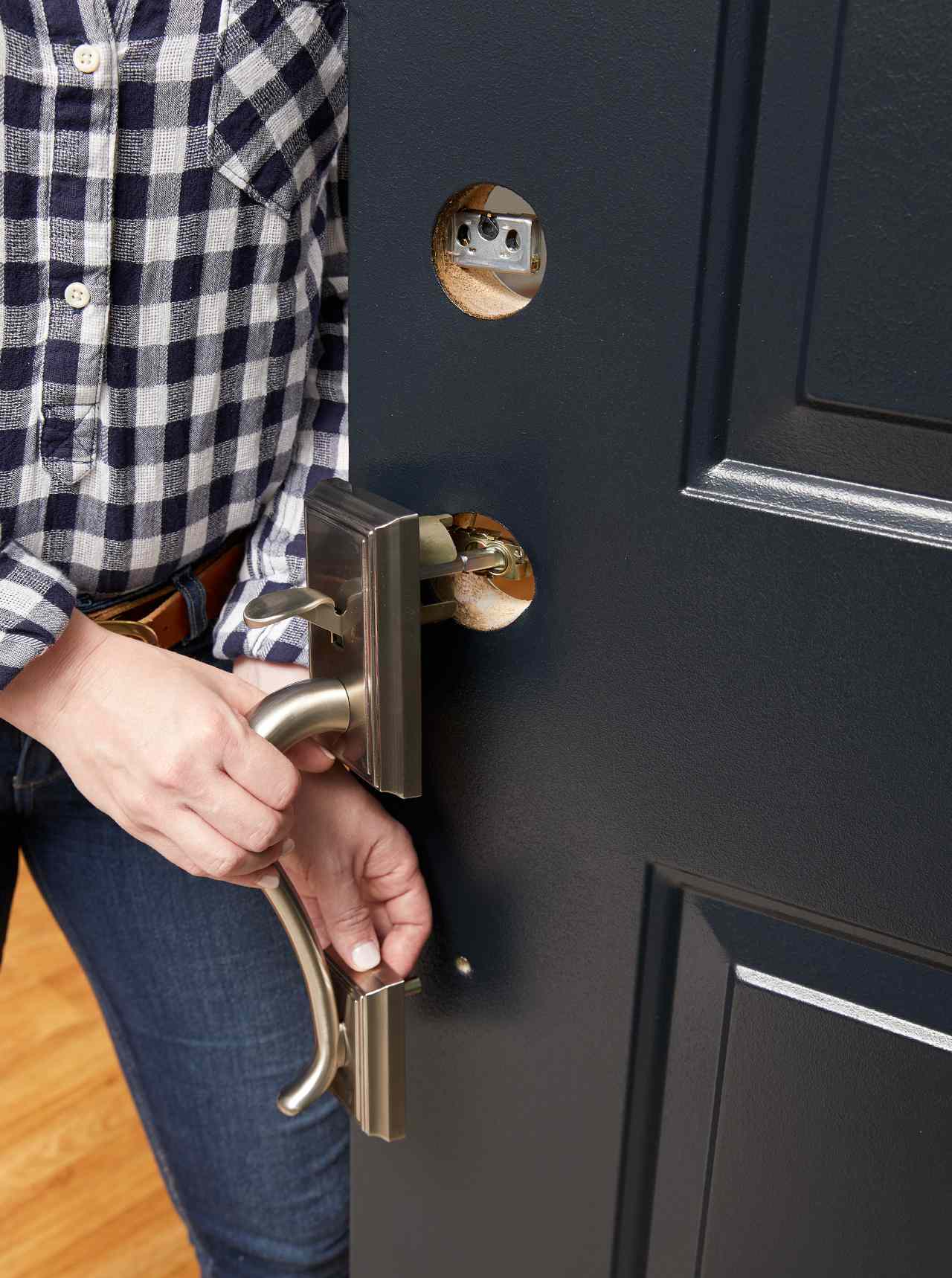
If your new door handle attaches to the door at a point below the lower borehole (like ours), you may need to drill another hole to accommodate. Line up the spindle on the back of the handle with the slot in the latch, sliding any mechanisms up or down as needed to fit the handle onto the door.Step 3: Install the Inside Handle
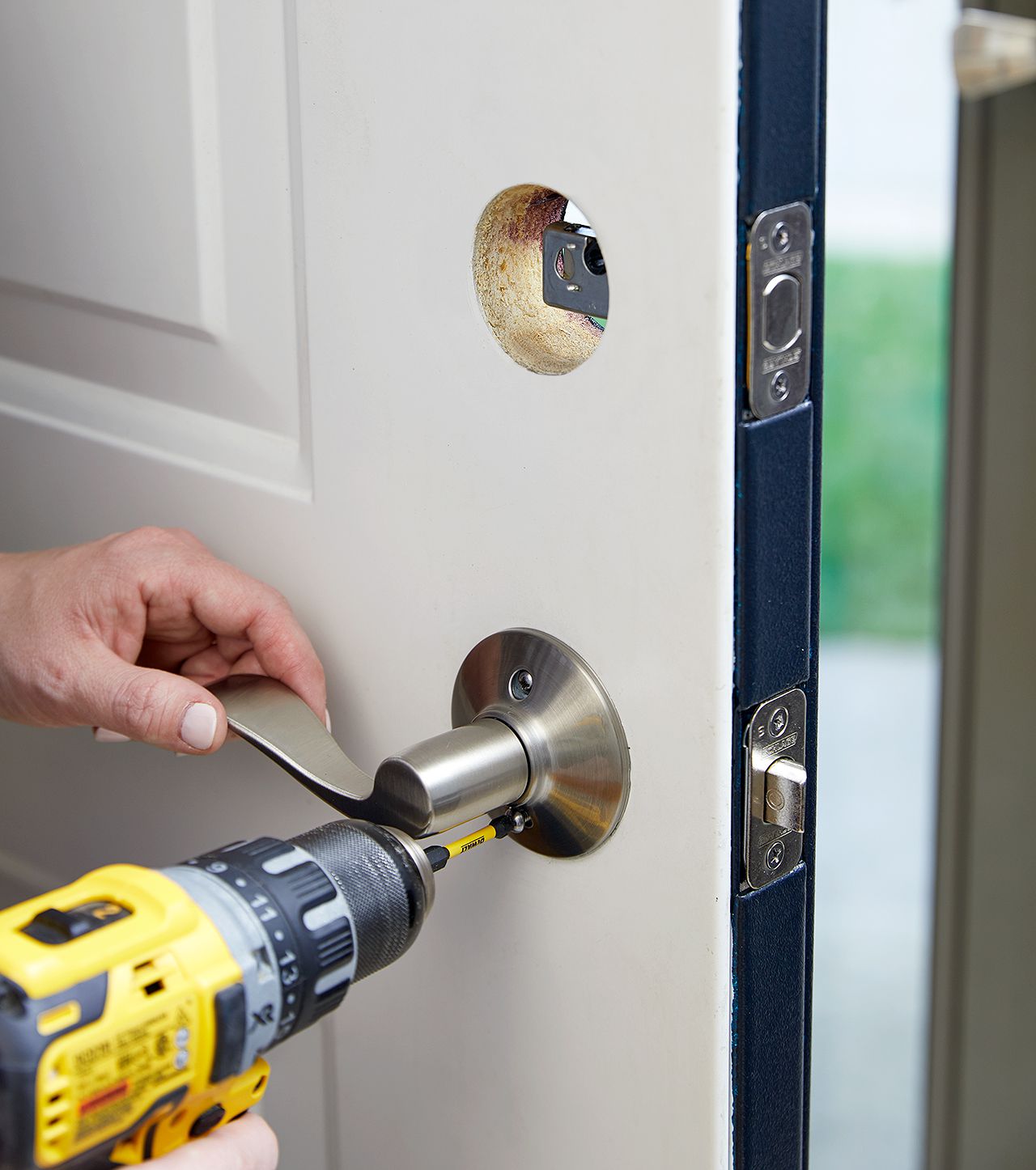
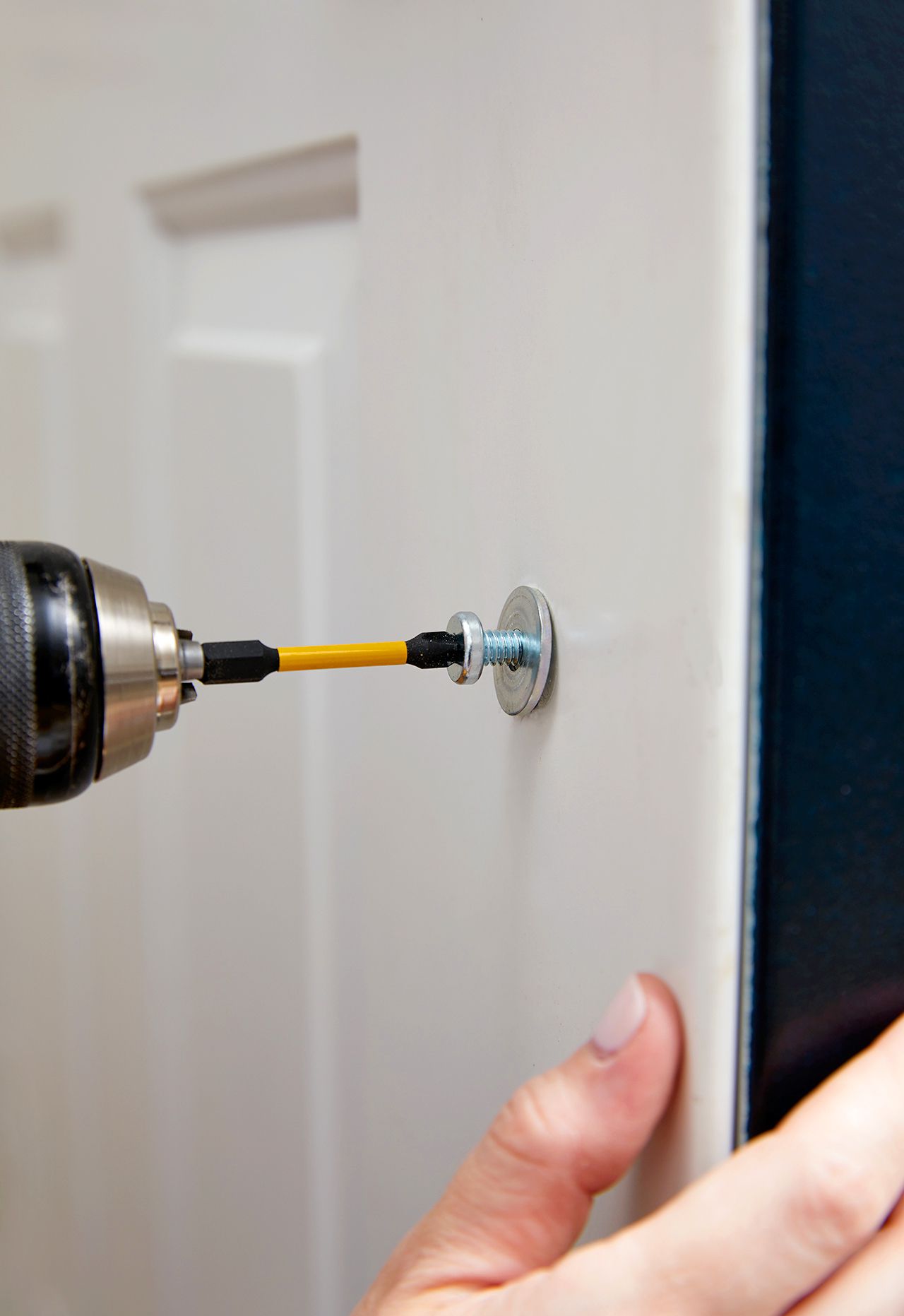
Line up the inside handle or lever so that the screw holes align vertically with the threaded posts on the back of the outside handle. If your inside handle is a lever, make sure that the lever is pointing away from the door jamb. Secure with screws. If your outside handle is attached to the door by a lower spindle (like ours), attach a washer, screw, and cover to secure and finish the spindle on the inside of the door.Step 4: Install the Deadbolt
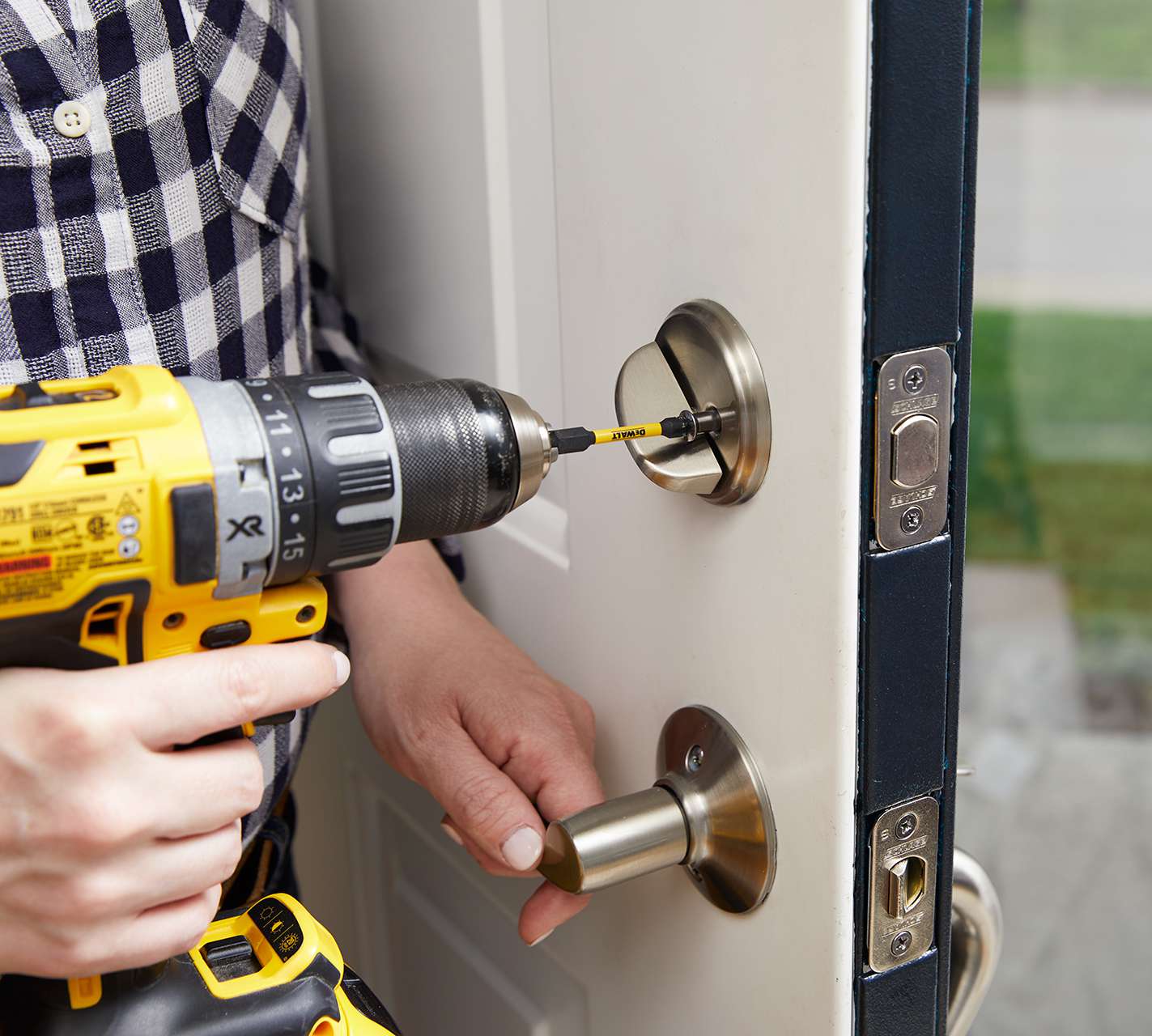
Repeat the procedure above for creating a faceplate indent if your lock calls for one and your door does not already have one. Fit the latch bolt into the upper cross bore, making sure the top is facing up (there is usually an arrow on the latch bolt to indicate). Screw the faceplate in to secure. Install the deadbolt mechanisms on the inside and outside, making sure the keyed cylinder part is on the outside of the door. The inside thumb turn should point up when unlocked, and point towards the door jamb when locked.Step 5: Install the Strike Plates
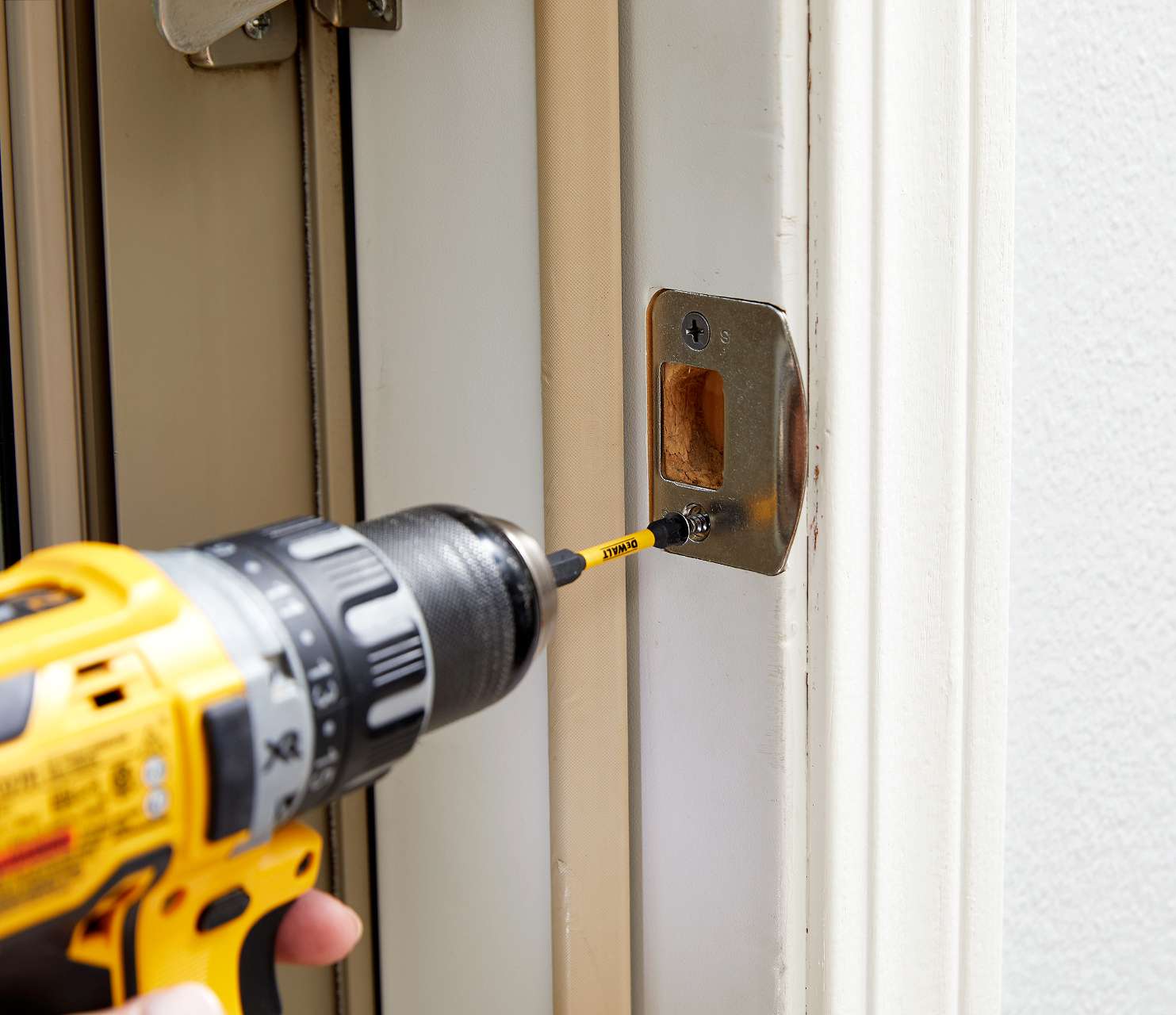
Align the strike plate for the handle against the door jamb and attach with two small screws. Make sure the bent lip of the strike plate is facing the direction in which the door opens. Align the strike plate for the deadbolt, pre-drill your holes, and attach the strike plate to the door jamb with two longer screws for extra reinforcement. Alternate between the two long screws as you drill them in so that the strike plate does not get pushed out of alignment. Test the latch and the deadbolt to make sure both slide in and out smoothly but not loosely. If the bolt won’t turn all the way, drill the bolt hole a little deeper until it does. Alternatively, you may need to adjust the position of the strike plate. Please note that this Scottsdale Real Estate Blog is for informational purposes and not intended to take the place of a licensed Scottsdale Real Estate Agent. The Szabo Group offers first class real estate services to clients in the Scottsdale Greater Phoenix Metropolitan Area in the buying and selling of Luxury homes in Arizona. Award winning Realtors and Re/MAX top producers and best real estate agent for Luxury Homes in Scottsdale, The Szabo group delivers experience, knowledge, dedication and proven results. Contact Joe Szabo at 480.688.2020, info@ScottsdaleRealEstateTeam.com or visit www.scottsdalerealestateteam.com to find out more about Scottsdale Homes for Sale and Estates for Sale in Scottsdale and to search the Scottsdale MLS for Scottsdale Home Listings.Choose the Right Fireplace
The right fit for your fireplace insert
Step one in choosing the right fireplace insert is getting the right size. Modern inserts come in a variety of shapes and sizes, and with a little investigating, you’ll find the perfect one for your fireplace.
When measuring the opening of your fireplace, measure from side to side and from top to bottom. If the top of your fireplace mouth forms an oval shape, take three up-and-down measurements: one on each side and one in the center.
What is your fuel preference?
After you know the dimensions of the insert that will fit your fireplace, decide if you want your fires to run on gas or wood. The inserts you’ll find in a good hearth store will all be constructed for high-efficiency operation, but there are a few other things to think about.
For the budget-conscious, a wood-burning fireplace insert is probably the wisest choice, because wood is less expensive to burn than gas. Additionally, a wood fire in an insert produces far less smoke than in a traditional “open” fireplace. This, coupled with the fact that wood in its natural state (i.e., tree) absorbs toxins from the atmosphere, means your fireplace is a carbon-neutral heating source.
Gas, however, is more convenient than wood. With a gas fireplace insert, starting a fire is as easy as flipping a switch. Controls allow you to adjust the flame level and therefore the amount of heat produced by the unit. A fireplace run on gas also requires no cleaning of ashes and wood chips from the firebox.
A fireplace insert as an accent to your home décor
Armed with the dimensions of your fireplace and the knowledge of what type of fuel you want to burn, the next step is a more creative one. With the many styles and finishes of fireplace inserts, it won’t be hard to select a model that compliments the design of your fireplace and your overall room décor.
Also consider the features you prefer. Here are a few of the options with a new insert:

- Efficiency rating
- Heating square footage
- Heating time
- Self-cleaning glass
- Remote control
- Accent lighting
Fall Home Checklist by Joe Szabo, Scottsdale Real Estate Team
It’s time to put away your light clothing as summer has officially ended. With the fall season upon us, it is a wonderful time to embrace new changes, as while the trees may shed their leaves, all of nature would once again wake up once spring comes.
Yet while fall is an exciting concept, with it comes the looming inevitably of winter. Thankfully, before the cold weather fully sets in, every homeowner is given the chance to prepare for it. You can use the fall season to prepare for winter, so when the latter comes, you would be prepared and snug in your cozy house.
Here’s a handy fall home maintenance checklist for you Arizona folks.
-
Set a good foundation.
Before you tinker with things indoors, make sure that your house is ready for winter. If there are any signs of weaknesses in your exterior, moisture can seep in and damage your walls and foundation.
Avoid this by inspecting your windows, sidings, doors, walls, driveways, and foundation, among others, for cracks and any signs of weakness. Experts say that if the gaps between your door frames or window and siding are already bigger than the width of a nickel, then you need to reseal it. Reseal any cracks you see and reapply caulking as needed. This will save you money from costly repairs come springtime, and would also ensure that your home is as airtight as it can be when it comes to keeping the cold out.
-
Look up!
You may be lax about your roof maintenance for the most part of the year, but you will be in for a rough few months if you don’t maintain it properly. Remember that fall can bring in all sorts of debris, such as leaves and whatnots that can all pile onto your roof. There have been numerous instances where roofs have caved in because of the intense amount of weight that is the result of several years of neglect!
What’s more, your roof will keep you protected during winter, and will help keep out the cold weather. As such, have your roof inspected this fall to ensure that it won’t drip all over you when it rains. Clean out your rain gutters and repair or replace any broken, loose, damaged, or missing shingles. While you already have someone up there, have that person check out your chimneys and vent stacks too.
-
Check out your outdoor plumbing
Outdoor plumbing is a godsend if you are muddy and don’t want to bring it indoors, or when you are washing your cars or cleaning your home’s exterior. Unfortunately, it can become a liability come winter, as burst pipes are among the more common problems of Arizona residents. You need to have your plumbing inspected to ensure that there is no residual water trapped into your pipes, and to reduce the risk of freezing or bursting. You also need to have it inspected so that you can have any broken pipes replaced.
Once you’re sure that there is no residual water and you don’t have broken plumbing, then as a precaution, shut off your water source for your outdoor plumbing. This will then give you peace of mind that your outdoor pipes would be safe from damage during the winter.
-
Turn the heat on

A qualified technician should be able to see if your system is in good working condition and that it has achieved maximum efficiency as rated by its manufacturer. Doing so would minimize your carbon-monoxide leakage, which in turn will make your home safer.
Also, here’s a helpful tip: use the “reverse” switch on your ceiling fan to make the blades run in a clockwise direction. This will produce an updraft and push down heated air from the ceiling. If you have high ceilings, this can also reduce your energy consumption as you can turn down your thermostat if warm air is already circulating through the house.
-
Run a thorough check
Your attic may be the place you stash a lot of unneeded but still wanted items in, but it can also be home to ice dams or icicles. Have a weatherization contractor or a home-energy auditor come into your home to identify and fix inadequate insulation or air leaks. This will help you avoid costly repairs brought about by meltwater, and the inevitable damage it would bring into your house.
Likewise, make sure that you also clean out your gutter of debris, as this can cause water to back up and once again cause leaks and ice dams.The Bottom line
While winter can wreak havoc into an unsuspecting homeowner’s property, the bottom line is that the amount of damage your home would incur during the winter would be minimal if you routinely maintain your home. For example, you don’t necessarily have to wait for winter to have your foundations checked for cracks.
You should address all these maintenance issues during the fall so that you would be ready when winter comes. Also, most inspectors and service providers are usually backlogged during the season, as there would be many customers who would want their homes serviced. If you dally on your decision to have your home checked, particularly your roof and heating unit, then you could be in for a long wait.
Please note that this Scottsdale Real Estate Blog is for informational purposes and not intended to take the place of a licensed Scottsdale Real Estate Agent. The Szabo Group offers first class real estate services to clients in the Scottsdale Greater Phoenix Metropolitan Area in the buying and selling of Luxury homes in Arizona. Award winning Realtors and Re/MAX top producers and best real estate agent for Luxury Homes in Scottsdale, The Szabo group delivers experience, knowledge, dedication and proven results. Contact Joe Szabo at 480.688.2020, info@ScottsdaleRealEstateTeam.com or visit www.scottsdalerealestateteam.com to find out more about Scottsdale Homes for Sale and Estates for Sale in Scottsdale and to search the Scottsdale MLS for Scottsdale Home Listings.Fall Planting for Arizona Gardeners by Joe Szabo, Scottsdale Real Estate Team
Despite the heat, everyone is itching to get going, here’s a list of all the things that can go into the ground. We’re starting with October in this post because we want you to use September to prepare your soil. Tending to soil is the best thing you can do to ensure a good crop of healthy, relatively pest-free produce. Remember to prepare your soil and then let it sit for a few weeks before planting, so everything gets a chance to percolate together.
Fall Seeds & Transplants:
Vegetable Seeds – Beets, Bok Choy, Broccoli, Brussels Sprouts, Cabbage, Chinese Cabbage, Carrots, Cauliflower, Celery, Chard, Collard Greens, Endive, Kale, Kohlrabi, Lettuce (both leaf and head), Leeks, Mustard, Onions, Parsnips, Peas, Radishes, Rutabagas, Spinach, Turnips Vegetable Transplants – Broccoli, Brussels Sprouts, Cabbage, Chinese Cabbage, Cauliflower, Celery, Chard, Garlic, Kohlrabi, Lettuce (head and leaf) Flower Seeds – Calendula, Cornflower, Desert marigold, Gaillardia, Johnny Jump-ups, Larkspur, Nasturtium, Sweet Pea, Wildflowers (native varieties) Herbs – Chives, Cilantro, Dill, German Chamomile, Fennel, Lemon Grass, Marjoram, Mint, Oregano, Parsley, Rosemary, Sage, Salad Burnet, Thyme If you’re interested in taking your gardening skills to the next level come to the Cool Season Vegetable Gardening Workshop. Nurseryman Gregory Ware will teach you everything you need to know to grow your own healthy organic fall crop garden.Soil:
This is the foundation of everything that happens in your garden and if you skip it, you run the risk of losing what you plant. Every time you plant you need to renew/refresh/feed your soil. Our native soils lack a lot of nutrients that plants need, and when nutrients are added your healthy garden plants use them up. It’s important to feed your soil each season before you plant. 1. Start by cultivating your garden beds. Dig into them (not when the soil is soaking wet), fluff up the soil, make air in there so roots will grow. 2. Add organic matter – basically you are feeding your soil beneficial microorganisms that will become nutrients for the plants. Organic matter is composted horse or chicken manure, or compost (preferably from your own compost pile). 3. Add sulfur – Desert soil is very alkaline and soil sulfur counteracts alkalinity. It helps make the nutrients in the soil available to plants as well as helping to reduce nutrient deficiencies such as chlorosis and calcium deficiency. 4. Add organic fertilizer – If you are planting flowers choose a balanced fertilizer with a good amount of phosphorous (the second of the three hyphenated numbers on the package) for good bloom. If you’re planting vegetables and fruits, choose a granular fertilizer formulated to help them, like Happy Frog Tomato & Vegetable Fertilizer. Please note that this Scottsdale Real Estate Blog is for informational purposes and not intended to take the place of a licensed Scottsdale Real Estate Agent. The Szabo Group offers first class real estate services to clients in the Scottsdale Greater Phoenix Metropolitan Area in the buying and selling of Luxury homes in Arizona. Award winning Realtors and Re/MAX top producers and best real estate agent for Luxury Homes in Scottsdale, The Szabo group delivers experience, knowledge, dedication and proven results. Contact Joe Szabo at 480.688.2020, info@ScottsdaleRealEstateTeam.com or visit www.scottsdalerealestateteam.com to find out more about Scottsdale Homes for Sale and Estates for Sale in Scottsdale and to search the Scottsdale MLS for Scottsdale Home Listings.Growing Gardenias In Arizona by Joe Szabo, Scottsdale Real Estate Team
Would you like to grow gardenias in Arizona? A lot of people love the plant but seem to struggle in our uniquely hot and arid environment. This post will give you insight into how to do it.
Choosing The Right Gardenia
The gardenia can play different roles in your garden and landscape. They grow to different widths and heights, so considering what role your want it to play will help you with choosing the right gardenia for your yard. All gardenias feature the wonderful fragrant flowers, however there can be differences between when they will bloom and how big their mature size will be. If you want the gardenia to be the crowning jewel of your flora you will need to plan plenty of room for a larger variant to stretch out and grow. Some varieties of gardenia only mature to be a low, tidy plant that is well used to edge a flower bed or walkway. The Everblooming Gardenia only matures to 4 feet high and can be a wonderful boarder or walkway plant. In contrast the Cape Jasimine Gardenia can grow to a massive 8 feet wide, and just as tall.The Right Shrub In the Right Zone
Plants are divided into the geographical zones that they grow best in. This is usually printed on the plant label or container. If you are unsure of either the zone you live in, or what zone a particular plant grows in, as your nursery professional. Arizona is a large state that covers a few different zones based on geography and topography. Knowing your zone will help you choose the right types for your garden. Most gardenias grow well in zone 9, which covers a large portion of Southern Arizona. Northern Arizona includes zones 8, 7, 6, and in very small areas zone 5. Choose plants that are rated for your area and you will see greater success. Some professional landscapers or passionate gardeners choose a variety of gardenias that have different bloom times. This means that there are more days per year where the landscape will have that wonderful aroma. When done properly, you can have blooming gardenia all the way from May through August.Choosing The Right Place To Plant
Even when you have chosen the right shrub for your zone, where your plant it in your landscape can affect how it will grow. There are three main considerations for choosing the right place to plant your gardenia. These are which zone you are in, the soil quality, controlling moisture content, and how much light the plant will receive.
Knowing The Soil
The pH balance of the soil is particularly important for the successful growing of the gardenia. You will want the pH to be between 5.0 and 6.5. This is considered a slight acidic soil which might not be compatible with other plants in your landscape, or be naturally present in your native soil. Soil testing kits should be used in preparation for the planting of gardenias to measure the pH of the soil and to know if or how much adjustment needs to be done. If your pH is too high you can add sulfur to your soil. There are different types of sulfur available at local nurseries. Soil pH should be done months in advance if possible. If the soil is excessively sandy or filled with clay deposits you will want to amend the soil with plenty of organic compost. Be sure to test the soil where you going to plant your gardenia, since the quality of soil varies throughout your yard, especially near the foundation of homes.Knowing The Moisture
Well draining soil and consistent watering is absolutely necessary for the gardenia. These are not drought tolerant shrubs and will not happily wait for the next monsoon season for their water. Soaking the soil isn’t an option either; soggy roots can cause serious problems with gardenias. The compost you add to the soil will help retain the water needed while allowing the rest of the water to drain away. Setting up soaking hoses around the gardenias that are on timers will help take the guess work out of keeping track of watering the gardenia. This means one inch of water per week. Clearly Arizona doesn’t always get that from rain, so be prepared to make sure they get just what they need, and don’t overwater.Knowing The Daily Light
While the gardenia thrives in heat and light in Arizona full sun all day isn’t a good idea. It is best to protect the gardenia from the intense heat and afternoon direct sunlight. This means choosing sites that are on the north or east facing exposures. That will help get the morning light while only allowing some midday sunlight and be protected for the afternoon.When To Plant The Gardenia
The best time to plant the gardenia is when temperatures are moderate. This means in the fall or spring. When planting in higher elevations or Northern Arizona it is best to plant the gardenia in the spring so the root system will be developed before the fall and colder days. Gardenias like to be planted a little high compared to the surface of your soil. This means digging a hole as wide and deep as the root ball. However make sure you firmly pack in around 4 inches of soil at the bottom of the hole before you place the plant in the ground. Place the soil from the hole you dug back in around the root ball and cover the section that stands above the soil. Complete the planting by adding a layer of mulch compost. Make sure that it isn’t placed touching the stem of your gardenia. Apply the mulch every year to help prevent harsh temperatures or weeds from affecting your gardenia.Gardenia Nurseries In The East Phoenix Valley
A&P Nursery has 4 locations that can help you with all of your gardening needs. From the large yard to small urban farming type set ups we have the plants, the tools, the knowledge to help get you going and keep your gardening thriving!Much about Mulch by Joe Szabo, Scottsdale Real Estate Team
There are a number of advantages to adding mulch in your garden. In the summer, mulch helps the soil hold moisture so you don’t have to water your garden as often. In the hot sun, soil also tends to dry out faster and harden. Mulch will help with this by protecting the soil from direct sunlight.
Mulch also prevents weeds. Adding mulch to your planting bed will block light from openings in the soil, therefore inhibiting weed germination. By adding a thick layer of mulch, you’ll ensure that the weeds never see the light of day!
Tip: While a concentrated layer of mulch is ideal, don’t overdo it. 2–4 inches is the ideal depth for a mulch layer.
Over time, garden mulch types made from organic materials break down and increase your soil’s structure and fertility. This is especially true with compost used as a mulch, as the nutrients will promote soil organisms and aid in plant growth.
Shredded bark is one of the most common and least expensive types of mulch. It comes from a variety of sources, including cedar trees. Shredded bark is one of the best mulch types to use on slopes and it breaks down relatively slowly. Some shredded-bark products are byproducts from other industries; they’re considered environmentally friendly. Check the mulch packaging for more information.
Straw mulch has a beautiful golden color that looks great in the garden. It’s also a bit slower to break down than leaves or grass clippings. Some gardeners like smaller, more shredded straw pieces while others prefer larger straws. Straw is classically used in more utilitarian gardens, such as vegetable gardens, and under strawberry plants. Straw does a great job of keeping mud out of your edibles.
Compost looks like soil, except it’s darker, so it really sets off plants well. This mulch material breaks down quickly but adds to your soil structure the fastest. Plus, it’s inexpensive; you can create your own rich compost for free. Many municipalities give away compost as well.
These bark nuggets are slower to break down than shredded bark, but they don’t stay in place as well. They’re not the best type of mulch for slopes or other areas where they may be washed away by heavy rain; the chips will tend to float and take off like boats. The nuggets are available in a variety of sizes; the bigger the nugget, the longer it lasts.
Please note that this Scottsdale Real Estate Blog is for informational purposes and not intended to take the place of a licensed Scottsdale Real Estate Agent. The Szabo Group offers first class real estate services to clients in the Scottsdale Greater Phoenix Metropolitan Area in the buying and selling of Luxury homes in Arizona. Award winning Realtors and Re/MAX top producers and best real estate agent for Luxury Homes in Scottsdale, The Szabo group delivers experience, knowledge, dedication and proven results. Contact Joe Szabo at 480.688.2020, info@ScottsdaleRealEstateTeam.com or visit www.scottsdalerealestateteam.com to find out more about Scottsdale Homes for Sale and Estates for Sale in Scottsdale and to search the Scottsdale MLS for Scottsdale Home Listings.