 By Joe Szabo, Scottsdale Real Estate Team
Fireplaces are one of the most sought-after home features, but using one can be intimidating, and you’ve probably got questions.
Here’s a quick guide to get you and your fire started this fall.
By Joe Szabo, Scottsdale Real Estate Team
Fireplaces are one of the most sought-after home features, but using one can be intimidating, and you’ve probably got questions.
Here’s a quick guide to get you and your fire started this fall.
How do I use a wood-burning fireplace?
If a cave man can start a fire, so can you. 1. Get your chimney inspected Safety is your first priority! Have your fireplace and chimney inspected by a licensed professional. This is something you should do every year, before the first fire of the season. 2. Prepare the fireplace Clean out any old ashes with a broom (make sure they’re cool, of course). Check that the damper is open and working properly. 3. Gather and prep your wood Use seasoned hardwood that has been split and dried for at least six months — preferably for a year. Seasoned hardwood logs should be dark and cracked at the ends, and they should make a hollow sound when knocked together. To construct a long-lasting fire, place a rolled-up ball of newspaper beneath the grates. Then lay pieces of narrow, finely split wood in a crisscross pattern on the grates. Finish the stack by securely resting one to three dry logs over the kindling. 4. Prime the flue This step heats the cold air inside the flue so you don’t get a backup of smoke. Before you light the fire, light a tightly rolled-up sheet of newspaper, and hold it toward the open damper. Keep it there for a minute or two until you see the smoke going up the flue. 5. Light it up! Now you’re ready to light your fire and enjoy. If the fire starts to go out, gently fan the flames with folded newspaper or use a poker to get the air flowing again. Add logs to the fire with tongs to provide more fuel. When the fire has gone out for the night, close the metal or glass doors before you go to bed.Are fireplaces efficient?
It depends. Wood-burning fireplaces, for all their old-fashioned charm, are a wildly wasteful way to heat a house. Since heat rises upward, most of it escapes through the chimney, even when the fire has gone out for the night. Fireplaces located against an outside wall lose even more heat, since much of it is lost to the cold outdoor air. Solution? Only use your wood-burning fireplace for special occasions. If you don’t plan on using your fireplace often, purchase an inflatable plug to add insulation. Gas fireplaces are more efficient, and the newest models are realistic enough to make you forget that you don’t own any firewood. Switching to a gas insert is expensive, though, especially if you have to make changes to your chimney. If aesthetics are all that matter, use your fireplace to display lit candles.Are fireplaces safe?
Fire is the very definition of unsafe, but that doesn’t mean you can’t safely enjoy your fireplace. You just have to maintain it and practice common sense:- Keep flammable materials and objects away from the fireplace, and store firewood well away from the house.
- To keep embers from flying out and igniting your unread stack of magazines, use a mesh or metal screen when the fire is lit.
- Before lighting the first fire of the season, inspect your extinguishers, test your smoke detectors and review your family’s evacuation routes.
- Continue to test your smoke and carbon monoxide detectors monthly.
- The glass doors, mesh screen and tools can be dangerously hot. If you have children, use a free-standing barrier to prevent burns.
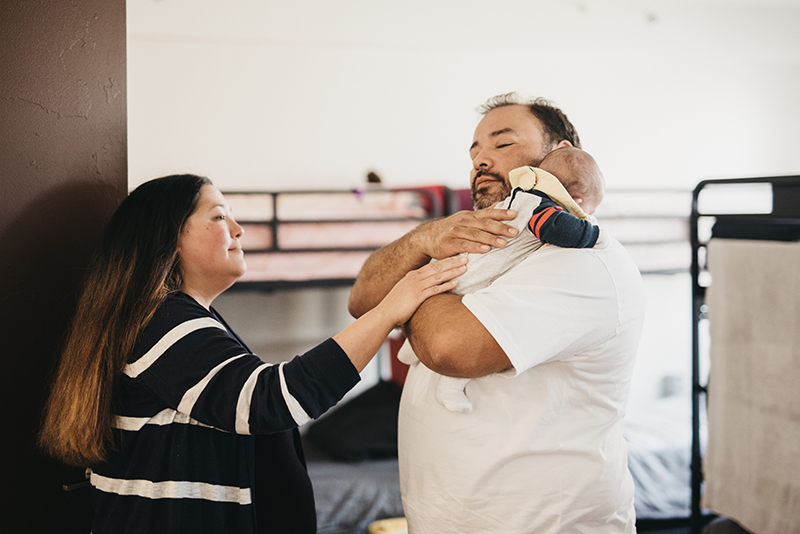 While a small housing operation can’t alleviate every concern for families in medical and financial distress, simply having a bit of support can provide immense relief — relief that those families need to take their next step.
“Not only do they have their own private rooms,” says Marty Hartman, executive director of Mary’s Place, “but they also have access to our healthcare clinic. They have a Popsicle Place lounge, where if their children aren’t feeling so well or if they have immunocompromised conditions, they can go in there and relax. [We] just want to set them all up for success.”
And that they do, with excellent results.
While a small housing operation can’t alleviate every concern for families in medical and financial distress, simply having a bit of support can provide immense relief — relief that those families need to take their next step.
“Not only do they have their own private rooms,” says Marty Hartman, executive director of Mary’s Place, “but they also have access to our healthcare clinic. They have a Popsicle Place lounge, where if their children aren’t feeling so well or if they have immunocompromised conditions, they can go in there and relax. [We] just want to set them all up for success.”
And that they do, with excellent results.
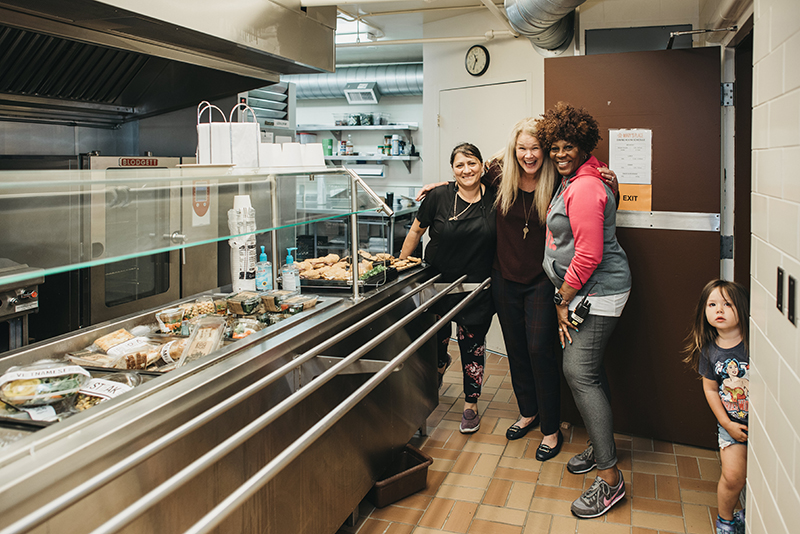 With their basic needs managed, the family members soon found a large, affordable 3-bedroom house in Spokane and happily relocated. They now enjoy a large yard, as well as a home to call their own.
That’s exactly what the program is all about, according to Hartman. “Let’s get you the housing options that you need and then move you forward.”
With their basic needs managed, the family members soon found a large, affordable 3-bedroom house in Spokane and happily relocated. They now enjoy a large yard, as well as a home to call their own.
That’s exactly what the program is all about, according to Hartman. “Let’s get you the housing options that you need and then move you forward.”
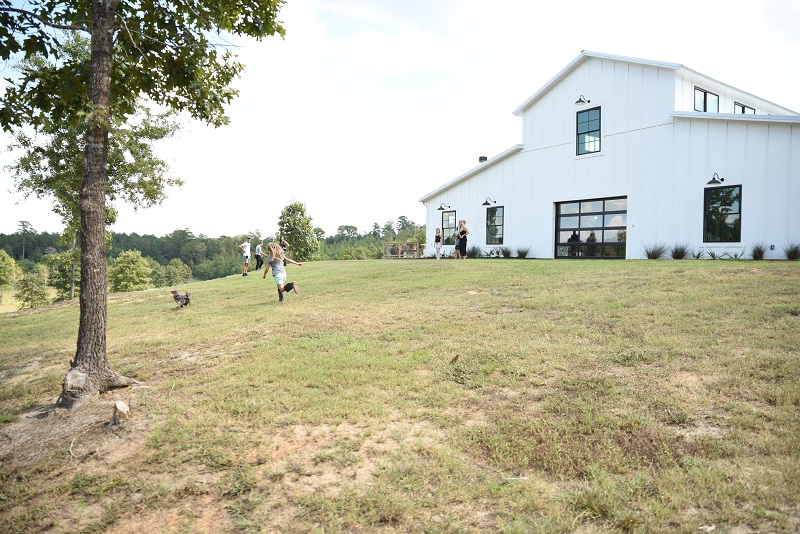 “I remember [my mom] specifically saying, ‘You could roll the doors up and drive through the house,’” Moore-Clark says.
And that’s when it all clicked. With the help of Moore-Clark’s father, a former army draftsman, they made a new plan, hired a team of subcontractors and watched their home begin to take shape.
“It was a very organic [building] process,” Moore-Clark says. “As the framers started framing it up, we would come into the room, and I would try to envision what our life [would look] like.”
Moore-Clark doesn’t have to use her imagination anymore. Today the couple, their three daughters, a dog, an old pony and 80 free-range chickens roam about the 10,000-square-foot home. And although they spend most of their time in a small fraction of the space, there’s plenty of room to grow. Three main areas, to be exact.
“I remember [my mom] specifically saying, ‘You could roll the doors up and drive through the house,’” Moore-Clark says.
And that’s when it all clicked. With the help of Moore-Clark’s father, a former army draftsman, they made a new plan, hired a team of subcontractors and watched their home begin to take shape.
“It was a very organic [building] process,” Moore-Clark says. “As the framers started framing it up, we would come into the room, and I would try to envision what our life [would look] like.”
Moore-Clark doesn’t have to use her imagination anymore. Today the couple, their three daughters, a dog, an old pony and 80 free-range chickens roam about the 10,000-square-foot home. And although they spend most of their time in a small fraction of the space, there’s plenty of room to grow. Three main areas, to be exact.
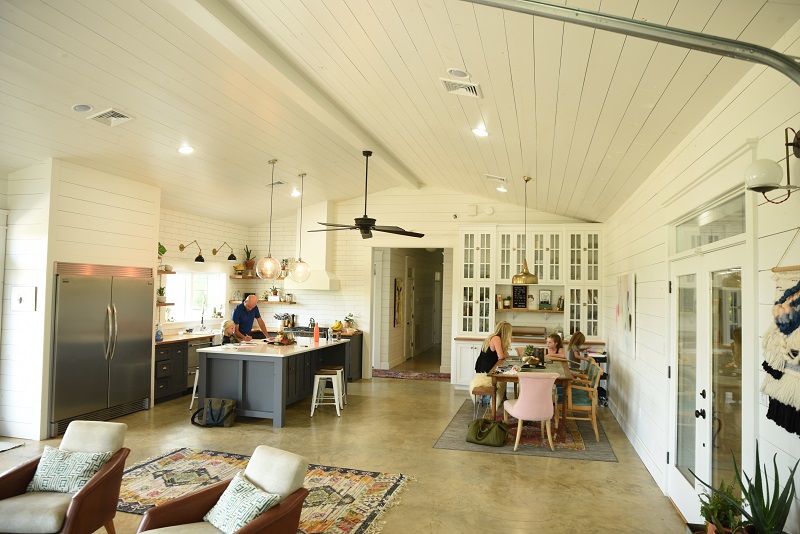
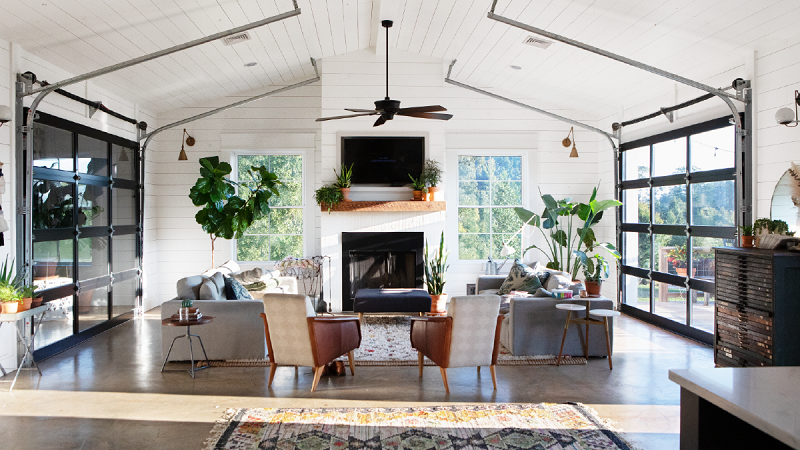 At approximately 2,250 square feet, the east side of the home is where you can usually find the family. This area includes the bedrooms, the living room/kitchen area and the bathroom.
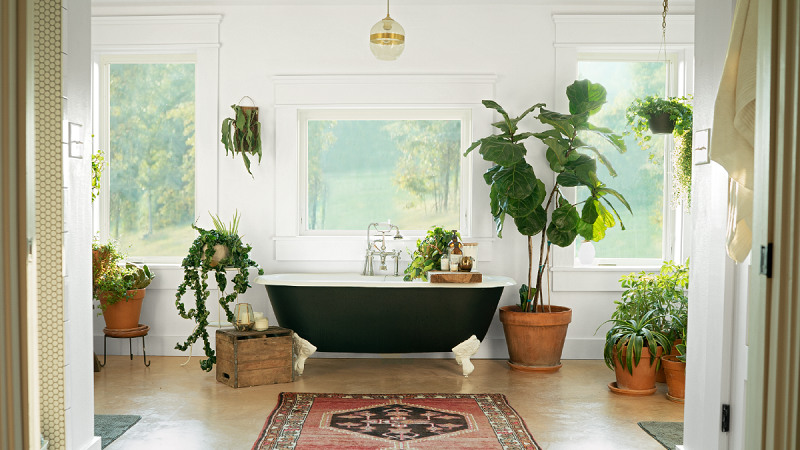 Speaking of that bathroom: “I wanted it to be like a little greenhouse,” Moore-Clark says. Her vision for the bathroom predates the actual bathroom itself — she bought the tub before they started building.
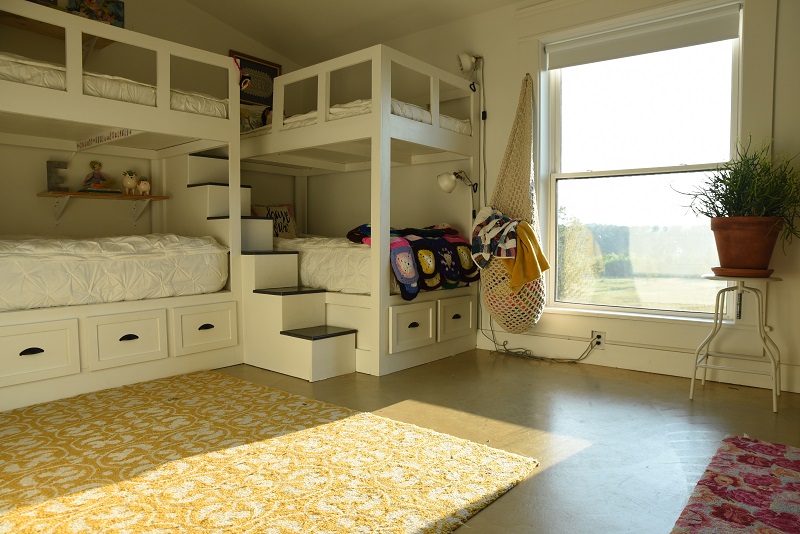
Even though there’s room for dozens of bedrooms, the girls share one room, complete with custom-designed bunk beds.
Speaking of that bathroom: “I wanted it to be like a little greenhouse,” Moore-Clark says. Her vision for the bathroom predates the actual bathroom itself — she bought the tub before they started building.
Even though there’s room for dozens of bedrooms, the girls share one room, complete with custom-designed bunk beds.
 And then there’s the breezeway. This is the second section of the home, and it’s around 2,000 square feet. The breezeway is an indoor porch area with roll-up doors and plenty of living space.
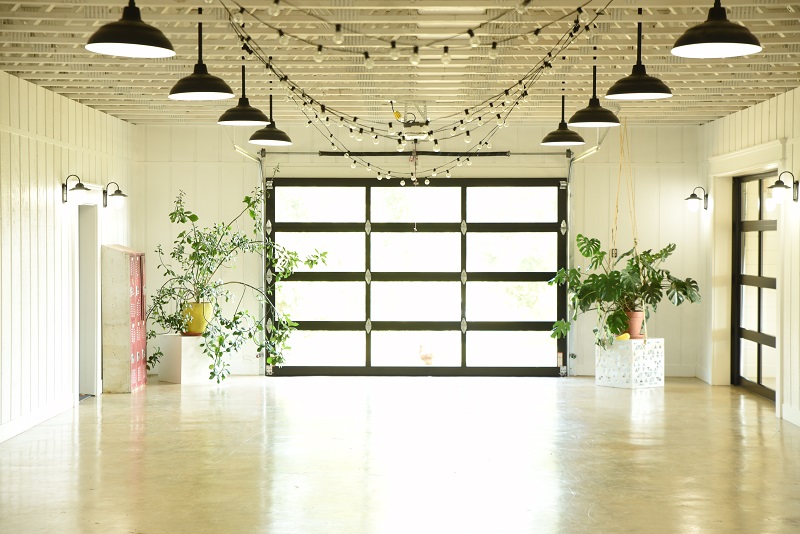 “Lots of playing happens in the breezeway,” Moore-Clark says. “[The girls] ride their bikes through it, put on musical events with their friends — ballets, plays, lots of things.”
Finally, there’s the west side, which contains an office space, a home gym, a shop, and a guest bedroom and bathroom.
“Lots of playing happens in the breezeway,” Moore-Clark says. “[The girls] ride their bikes through it, put on musical events with their friends — ballets, plays, lots of things.”
Finally, there’s the west side, which contains an office space, a home gym, a shop, and a guest bedroom and bathroom.
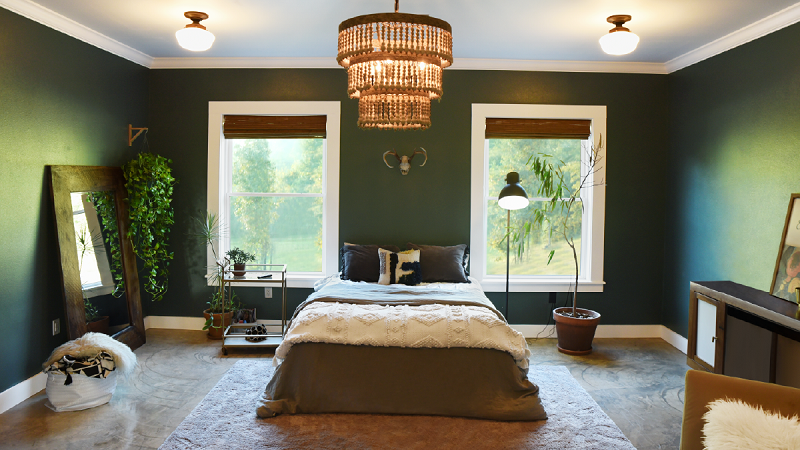 “When people stay … they really have their own space,” Moore-Clark says. “You don’t even hear each other. It’s good for a little retreat.”
The home is good for a lot of activities that fall outside the ordinary — it’s hosted live music recordings, floral workshops and even a Christmas Eve church service.
“When people stay … they really have their own space,” Moore-Clark says. “You don’t even hear each other. It’s good for a little retreat.”
The home is good for a lot of activities that fall outside the ordinary — it’s hosted live music recordings, floral workshops and even a Christmas Eve church service.
 So what compelled Clark and Moore-Clark to create a space so vast and so intimate at the same time? They’re not really sure. Yet.
“We feel like, one day, it’s going to be used for something interesting. … [It’s] a gut feeling.” Moore-Clark says. “We don’t know exactly why we built this place the way it is. But we knew it was right.”
So what compelled Clark and Moore-Clark to create a space so vast and so intimate at the same time? They’re not really sure. Yet.
“We feel like, one day, it’s going to be used for something interesting. … [It’s] a gut feeling.” Moore-Clark says. “We don’t know exactly why we built this place the way it is. But we knew it was right.”