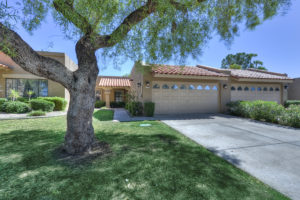
Front II
Scottsdale Real Estate and Arizona Luxury Homes brought to you by the Scottsdale Real Estate Team
Search Scottsdale real estate and Paradise Valley real estate, MLS homes and condos for sale. Find the latest market data to help with your property search. Specializing in luxury homes, golf properties, condos and more.

The Szabo Group - Re/Max Fine Properties
Front II
 By Joe Szabo, Scottsdale Real Estate Team
While homelessness may not be viewed as a looming issue on the horizon for those who are financially stable, or otherwise have secure and stable housing—it’s not as distant as some might think. With rents rising faster than wages, the burden of affording rent is looming larger and larger for many Americans, and in some cases becoming insurmountable.
According to the Zillow Group Report on Consumer Housing Trends 2017, 79 percent of renters who moved in the last 12 months experienced an increase in their monthly rent before moving to a new place. And over half (57 percent) said that hike was a factor in pushing them out the door and into another rental. Only 21 percent of renter households didn’t report experiencing an increase in rent.
Nearly a third (30 percent) of households nationwide, representing roughly 73 million adults, report they’re struggling or just getting by financially. And it’s no wonder; Americans spend on average a median of 29.1 percent of their income on rent, including many who spend a higher percentage but have lower incomes. Increasingly, major metro areas are becoming out of reach for those who aren’t earning more than minimum wage, and this is becoming increasingly true even in markets that have historically been more affordable.
Take Houston, for instance, where the median low-income earner spends 65.1 percent of her income on the median bottom-tier rent. Then there’s notoriously expensive New York, where—along with San Francisco and Los Angeles markets—the median low-income wage will not even cover a low-end apartment. In New York alone, to afford apartments with median bottom-tier rents, renters need to shill out 111.8 percent of the median low-income wage.
With such large percentages of household incomes going towards rent, saving for the future is less of a priority—and possibility. More than half (51 percent) of Americans say they don’t have enough money saved to support themselves for 3 months, according to the Federal Reserve Board’s 2016 Survey of Household Economics and Decisionmaking.
Millions Struggle Just to Afford Stable Housing
According to the Zillow Group Report on Consumer Housing Trends 2017, today’s median household income for renters is $37,500, which equates to about $18 per hour—or 2.5 times the federal minimum wage of $7.25. Nationwide, in 2016, 2.2 million people lived off wages at or below the federal minimum wage, according to the U.S. Bureau of Labor Statistics.
When it comes to renting, there is no state where a 40-hour minimum wage is enough to afford a two-bedroom apartment, according to the National Low Income Housing Coalition.
While renting is becoming increasingly more difficult, buying a home becomes a distant dream.“Honestly, if you’re making $37,500 per year and have no savings, it’s probably not feasible for you to buy in most markets,” Zillow Chief Economist Dr. Svenja Gudell says.
Across all states, the median renter can expect to pay $1,430 per month on rent. It’s no wonder many Americans are struggling financially— particularly in New York, Los Angeles, Washington D.C., and Seattle, where there’s also a stronger relationship between rising rents and an increase in the homeless population.
Homelessness by the Numbers
Coast to coast, there are an estimated 550,000 homeless people, according to the U.S. Department of Urban and Housing Development. But Zillow Research used statistical modeling to estimate the uncounted homeless population, unsheltered homeless people often missed during the One Night Counts, to estimate the true number of homeless people, a number much higher than the official estimates. And as rents climb, the numbers will only grow, especially in large, tight metros, where the rent burden can become life-altering.
Take New York City, for example. The metro has the largest population of homeless people than anywhere else in the nation. Last year, there were an estimated 76,411 people experiencing homelessness, according to Zillow’s estimates. If rents were to rise 5 percent, an additional 2,982 people would be forced to the streets.
And Los Angeles doesn’t fare much better. Given the same rent hike, an additional 1,993 people would fall into homelessness. And a rent hike of 5 percent isn’t implausible, especially given that in L.A., rents rose 4.4 percent over the past year.
The Geography of Social Mobility
Right now, in L.A., renters dish out $2,707 per month for the median rent, which is almost twice the national median rent and amounts to nearly half of the median household income in the metro. With such a substantial chunk of money spent every month on rent, it’s no surprise the metro has an estimated 59,508 people without a home.
But rents haven’t always been so unaffordable. Just 17 years ago, three of the top 20 metros were rent-burdened, meaning renters paid more than 30 percent of their income on living expenses. Today, however, the number of cities that have become unaffordable have grown exponentially.
Currently, renters in 9 of the same top 20 metros can expect to spend 30 percent or more of their income on rent. The biggest share spent on rent comes from Los Angeles, where renters dish out nearly half (49 percent) of income on rent.
“The places where social mobility—the ability to climb the income ladder—is the greatest are now in places that are unaffordable for most people,” said Gudell. “San Jose or the Bay Area in general, parts of Boston, for example—these places have gotten to be so expensive that a lot of people who have an income of $37,500 a year will not be able to buy a home or even afford a family-sized rental.”
The Costs of Housing Instability Go Beyond Financial
Unfortunately, for too many, lack of affordable housing can complicate other critical aspects of life, including health and future livelihoods.
Individuals living in shelters are more than twice as likely to have a disability compared to the general population. This includes serious mental illnesses, conditions related to chronic substance abuse, diabetes, heart disease and HIV/AIDS, according to the U.S. Department of Housing and Urban Development.
Gudell says people have better outcomes when they aren’t constantly moving from place to place. “It’s been shown that you have better outcomes if you live in a stable environment with less frequent moves, which is easier to attain when you own versus renting,” Gudell said. “So, if you take stable environments away from people, their outcomes will most likely be worse than they are today, and that has an impact on education, on health and on income growth in the future.”
Please note that this Scottsdale Real Estate Blog is for informational purposes and not intended to take the place of a licensed Scottsdale Real Estate Agent. The Szabo Group offers first class real estate services to clients in the Scottsdale Greater Phoenix Metropolitan Area in the buying and selling of Luxury homes in Arizona. Award winning Realtors and Re/MAX top producers and best real estate agent for Luxury Homes in Scottsdale, The Szabo group delivers experience, knowledge, dedication and proven results. Contact Joe Szabo at 480.688.2020, info@ScottsdaleRealEstateTeam.com or visit www.scottsdalerealestateteam.com to find out more about Scottsdale Homes for Sale and Estates for Sale in Scottsdale and to search the Scottsdale MLS for Scottsdale Home Listings.
By Joe Szabo, Scottsdale Real Estate Team
While homelessness may not be viewed as a looming issue on the horizon for those who are financially stable, or otherwise have secure and stable housing—it’s not as distant as some might think. With rents rising faster than wages, the burden of affording rent is looming larger and larger for many Americans, and in some cases becoming insurmountable.
According to the Zillow Group Report on Consumer Housing Trends 2017, 79 percent of renters who moved in the last 12 months experienced an increase in their monthly rent before moving to a new place. And over half (57 percent) said that hike was a factor in pushing them out the door and into another rental. Only 21 percent of renter households didn’t report experiencing an increase in rent.
Nearly a third (30 percent) of households nationwide, representing roughly 73 million adults, report they’re struggling or just getting by financially. And it’s no wonder; Americans spend on average a median of 29.1 percent of their income on rent, including many who spend a higher percentage but have lower incomes. Increasingly, major metro areas are becoming out of reach for those who aren’t earning more than minimum wage, and this is becoming increasingly true even in markets that have historically been more affordable.
Take Houston, for instance, where the median low-income earner spends 65.1 percent of her income on the median bottom-tier rent. Then there’s notoriously expensive New York, where—along with San Francisco and Los Angeles markets—the median low-income wage will not even cover a low-end apartment. In New York alone, to afford apartments with median bottom-tier rents, renters need to shill out 111.8 percent of the median low-income wage.
With such large percentages of household incomes going towards rent, saving for the future is less of a priority—and possibility. More than half (51 percent) of Americans say they don’t have enough money saved to support themselves for 3 months, according to the Federal Reserve Board’s 2016 Survey of Household Economics and Decisionmaking.
Millions Struggle Just to Afford Stable Housing
According to the Zillow Group Report on Consumer Housing Trends 2017, today’s median household income for renters is $37,500, which equates to about $18 per hour—or 2.5 times the federal minimum wage of $7.25. Nationwide, in 2016, 2.2 million people lived off wages at or below the federal minimum wage, according to the U.S. Bureau of Labor Statistics.
When it comes to renting, there is no state where a 40-hour minimum wage is enough to afford a two-bedroom apartment, according to the National Low Income Housing Coalition.
While renting is becoming increasingly more difficult, buying a home becomes a distant dream.“Honestly, if you’re making $37,500 per year and have no savings, it’s probably not feasible for you to buy in most markets,” Zillow Chief Economist Dr. Svenja Gudell says.
Across all states, the median renter can expect to pay $1,430 per month on rent. It’s no wonder many Americans are struggling financially— particularly in New York, Los Angeles, Washington D.C., and Seattle, where there’s also a stronger relationship between rising rents and an increase in the homeless population.
Homelessness by the Numbers
Coast to coast, there are an estimated 550,000 homeless people, according to the U.S. Department of Urban and Housing Development. But Zillow Research used statistical modeling to estimate the uncounted homeless population, unsheltered homeless people often missed during the One Night Counts, to estimate the true number of homeless people, a number much higher than the official estimates. And as rents climb, the numbers will only grow, especially in large, tight metros, where the rent burden can become life-altering.
Take New York City, for example. The metro has the largest population of homeless people than anywhere else in the nation. Last year, there were an estimated 76,411 people experiencing homelessness, according to Zillow’s estimates. If rents were to rise 5 percent, an additional 2,982 people would be forced to the streets.
And Los Angeles doesn’t fare much better. Given the same rent hike, an additional 1,993 people would fall into homelessness. And a rent hike of 5 percent isn’t implausible, especially given that in L.A., rents rose 4.4 percent over the past year.
The Geography of Social Mobility
Right now, in L.A., renters dish out $2,707 per month for the median rent, which is almost twice the national median rent and amounts to nearly half of the median household income in the metro. With such a substantial chunk of money spent every month on rent, it’s no surprise the metro has an estimated 59,508 people without a home.
But rents haven’t always been so unaffordable. Just 17 years ago, three of the top 20 metros were rent-burdened, meaning renters paid more than 30 percent of their income on living expenses. Today, however, the number of cities that have become unaffordable have grown exponentially.
Currently, renters in 9 of the same top 20 metros can expect to spend 30 percent or more of their income on rent. The biggest share spent on rent comes from Los Angeles, where renters dish out nearly half (49 percent) of income on rent.
“The places where social mobility—the ability to climb the income ladder—is the greatest are now in places that are unaffordable for most people,” said Gudell. “San Jose or the Bay Area in general, parts of Boston, for example—these places have gotten to be so expensive that a lot of people who have an income of $37,500 a year will not be able to buy a home or even afford a family-sized rental.”
The Costs of Housing Instability Go Beyond Financial
Unfortunately, for too many, lack of affordable housing can complicate other critical aspects of life, including health and future livelihoods.
Individuals living in shelters are more than twice as likely to have a disability compared to the general population. This includes serious mental illnesses, conditions related to chronic substance abuse, diabetes, heart disease and HIV/AIDS, according to the U.S. Department of Housing and Urban Development.
Gudell says people have better outcomes when they aren’t constantly moving from place to place. “It’s been shown that you have better outcomes if you live in a stable environment with less frequent moves, which is easier to attain when you own versus renting,” Gudell said. “So, if you take stable environments away from people, their outcomes will most likely be worse than they are today, and that has an impact on education, on health and on income growth in the future.”
Please note that this Scottsdale Real Estate Blog is for informational purposes and not intended to take the place of a licensed Scottsdale Real Estate Agent. The Szabo Group offers first class real estate services to clients in the Scottsdale Greater Phoenix Metropolitan Area in the buying and selling of Luxury homes in Arizona. Award winning Realtors and Re/MAX top producers and best real estate agent for Luxury Homes in Scottsdale, The Szabo group delivers experience, knowledge, dedication and proven results. Contact Joe Szabo at 480.688.2020, info@ScottsdaleRealEstateTeam.com or visit www.scottsdalerealestateteam.com to find out more about Scottsdale Homes for Sale and Estates for Sale in Scottsdale and to search the Scottsdale MLS for Scottsdale Home Listings.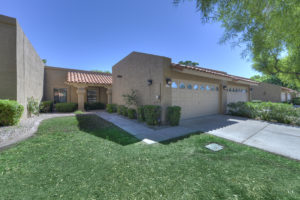
Front
 your home of toxins, you’re in for a surprise.
A 1989 NASA study attempted to find new ways to clean the air in space stations. Despite some pretty neat findings, it never claimed houseplants are great at removing chemicals from your home’s air — although countless articles have since cited the study as proof of that point.
And the headline “Houseplants Remove Toxins” does sound a lot more exciting than the report’s actual statement:
“Low-light-requiring houseplants, along with activated carbon plant filters, have demonstrated the potential for improving indoor air quality by removing trace organic pollutants from the air in energy-efficient buildings.”
And if you thought that was a buzzkill, the paper’s summary continues to disappoint:
“Activated carbon filters containing fans have the capacity for rapidly filtering large volumes of polluted air and should be considered an integral part of any plan using houseplants for solving indoor air pollution problems.”
In other words, even if your dracaena had the potential to remove trace toxins from your energy-efficient home, you’d still need to recreate NASA’s complicated system, which blows air through the activated carbon in the plant’s root zone.
Furthermore, if you see a list of the best plants for removing toxins, it’s nothing more than a list of the plants used in the study.
your home of toxins, you’re in for a surprise.
A 1989 NASA study attempted to find new ways to clean the air in space stations. Despite some pretty neat findings, it never claimed houseplants are great at removing chemicals from your home’s air — although countless articles have since cited the study as proof of that point.
And the headline “Houseplants Remove Toxins” does sound a lot more exciting than the report’s actual statement:
“Low-light-requiring houseplants, along with activated carbon plant filters, have demonstrated the potential for improving indoor air quality by removing trace organic pollutants from the air in energy-efficient buildings.”
And if you thought that was a buzzkill, the paper’s summary continues to disappoint:
“Activated carbon filters containing fans have the capacity for rapidly filtering large volumes of polluted air and should be considered an integral part of any plan using houseplants for solving indoor air pollution problems.”
In other words, even if your dracaena had the potential to remove trace toxins from your energy-efficient home, you’d still need to recreate NASA’s complicated system, which blows air through the activated carbon in the plant’s root zone.
Furthermore, if you see a list of the best plants for removing toxins, it’s nothing more than a list of the plants used in the study.


 Please note that this Scottsdale Real Estate Blog is for informational purposes and not intended to take the place of a licensed Scottsdale Real Estate Agent. The Szabo Group offers first class real estate services to clients in the Scottsdale Greater Phoenix Metropolitan Area in the buying and selling of Luxury homes in Arizona. Award winning Realtors and Re/MAX top producers and best real estate agent for Luxury Homes in Scottsdale, The Szabo group delivers experience, knowledge, dedication and proven results. Contact Joe Szabo at 480.688.2020, info@ScottsdaleRealEstateTeam.com or visit www.scottsdalerealestateteam.com to find out more about Scottsdale Homes for Sale and Estates for Sale in Scottsdale and to search the Scottsdale MLS for Scottsdale Home Listings.
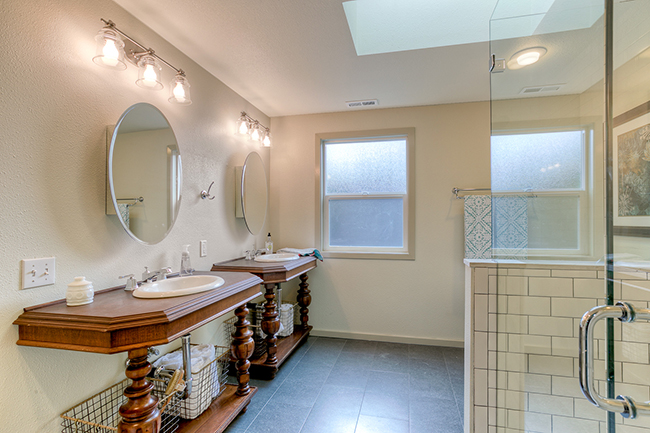 Although many people are flipping houses these days, Lindberg and Cederlind take a unique approach: a design-first attitude using reclaimed pieces found anywhere, from Craigslist to salvage yards to the side of the road.
“I think what people really want is character — they want a house that’s unusual,” Cederlind says. “A new tract house in Mississippi looks like a new tract house in Minnesota. People want to add character back in.”
Lindberg adds, “I think a lot of builders are good at construction, but they’re not design people. That’s where we feel we’re different — we’re design people first.”
A creative approach to both flipping and using reclaimed materials involves seeing potential others might overlook — and being willing to undertake a transformation. “Twice now we’ve bought an old, beautiful table with big, curvy gorgeous legs,” recalls Lindberg. “We cut it in half, and then we made double vanities. It makes a pedestal sink, so the two legs are out in the room, and the cut part is against the wall.”
Although many people are flipping houses these days, Lindberg and Cederlind take a unique approach: a design-first attitude using reclaimed pieces found anywhere, from Craigslist to salvage yards to the side of the road.
“I think what people really want is character — they want a house that’s unusual,” Cederlind says. “A new tract house in Mississippi looks like a new tract house in Minnesota. People want to add character back in.”
Lindberg adds, “I think a lot of builders are good at construction, but they’re not design people. That’s where we feel we’re different — we’re design people first.”
A creative approach to both flipping and using reclaimed materials involves seeing potential others might overlook — and being willing to undertake a transformation. “Twice now we’ve bought an old, beautiful table with big, curvy gorgeous legs,” recalls Lindberg. “We cut it in half, and then we made double vanities. It makes a pedestal sink, so the two legs are out in the room, and the cut part is against the wall.”

Kitchen



Mobile: 480-688-2020
Office: 480-889-8702
Fax: 480-355-9444
joe@azluxuryhomes.com
21000 N. Pima Rd
Suite 100
Scottsdale AZ, 85255